How a record is made
From Lacquer to Press
Making a vinyl record means turning sound into a groove, the groove into metal, and the metal into thousands of copies.

Cutting the lacquer
A cutting engineer plays the finished master through a lathe whose heated stylus carves a spiral groove into a soft lacquer-coated aluminium disc. Loudness, bass and side length all compete for space on the disc, so the cut is a craft in itself.
Into metal
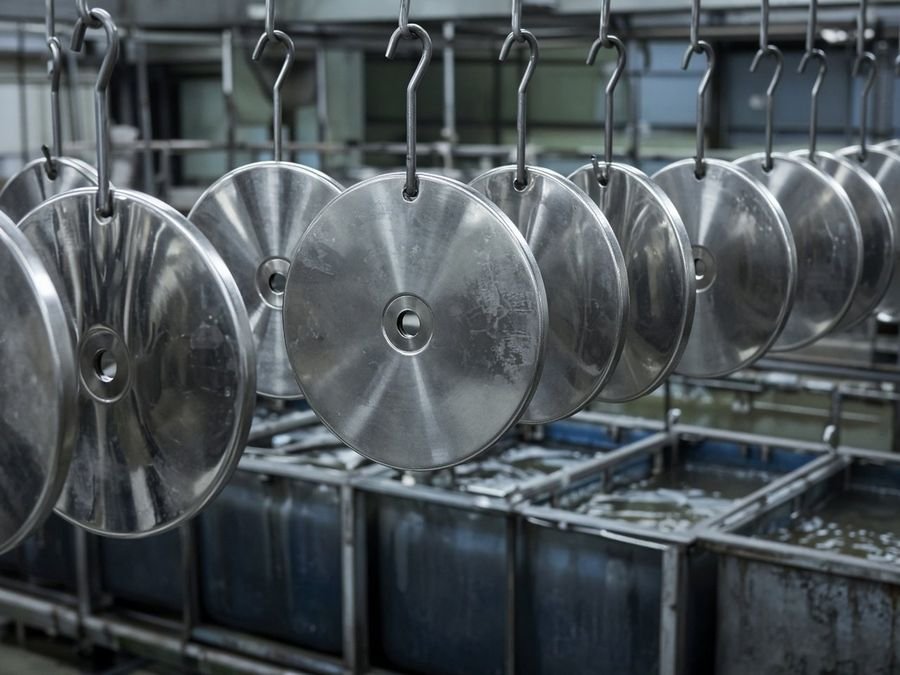
Because lacquer is too soft for pressing, it is coated and electroplated. The first metal part, called the father, is a negative copy of the grooves. From it a positive mother is made, which can be checked by playing it, and from the mother come the negative stampers used in the press. The same idea, using a copper or nickel master, has been used since the early days of disc records.
Pressing
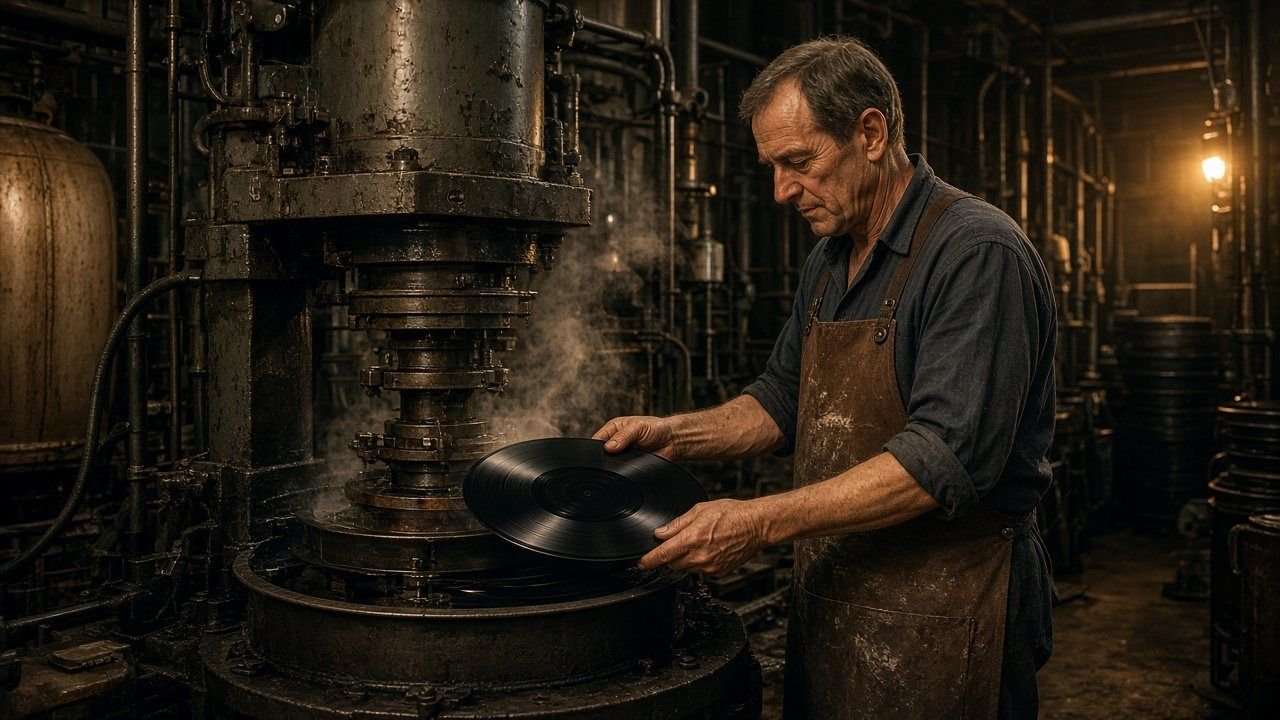
A puck of heated vinyl compound is placed between two paper labels and two stampers. The press closes under great pressure, steam softens the vinyl so it flows into every groove, and cold water sets it. The excess around the edge is trimmed and the record cools flat.
Test pressings and the run-out
A small batch of test pressings is played and approved before a full run. In the smooth run-out area near the label, engineers scratch or stamp matrix numbers and sometimes messages, which collectors still read today.