A history of records and the people who made them
Every record starts as a groove cut by hand.
Pioneer Records is a website about how records were made and dressed: the labels in the middle and the labels on the letterhead, lacquers and stampers, steam presses and run-out grooves, seven-inch singles and the art on the sleeve.
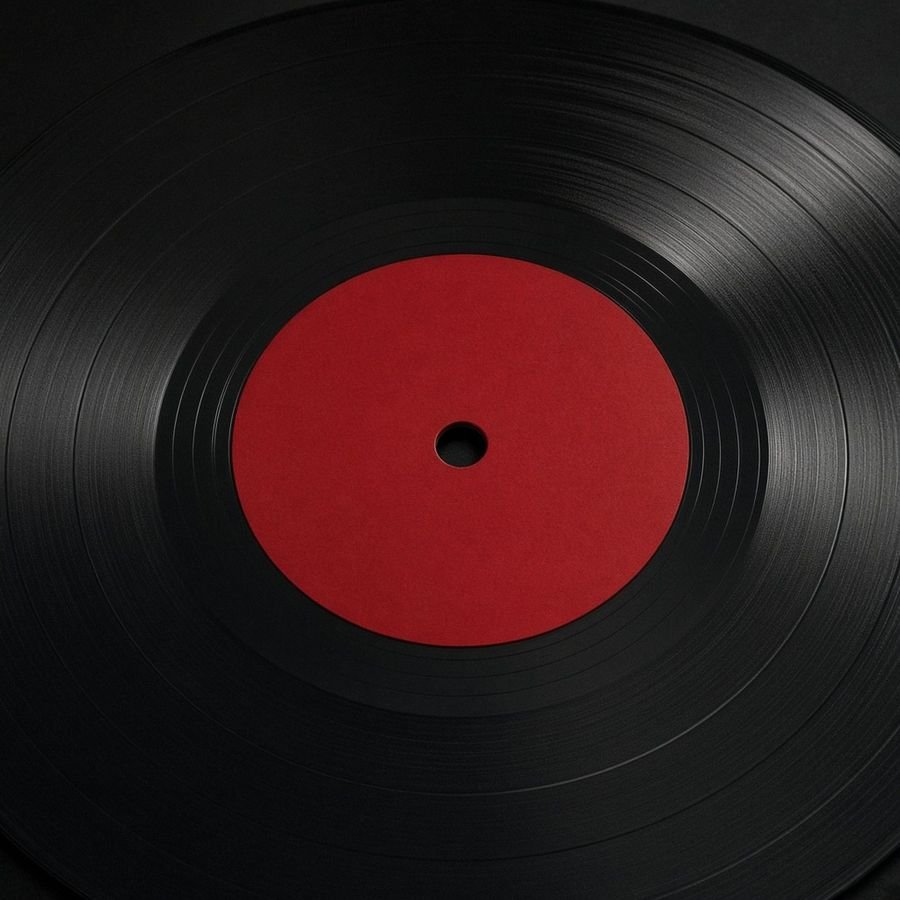
The label
The paper circle that became a company.
The round paper label pressed into the middle of a disc told you the title, the artist and the speed. Over time the word moved from the paper to the business behind it, and the best labels made that little circle a signature: a colour, a typeface, a logo you could recognise across a shop.
Collectors still date pressings by the label alone, by its colours, its rim text and the small changes printers made from one year to the next.
Cutting
Into the lacquer.
A record’s life begins on a lathe. A cutting engineer plays the finished master through a heated stylus that carves a single spiral groove into a soft lacquer-coated disc. Loud bass needs wider groove spacing, so every cut is a balance between volume and playing time.


The pressing plant
Steam, pressure and a puck of hot vinyl.
In the press, a soft lump of heated vinyl compound sits between the two paper labels and the two stampers. The press closes, steam heats it, cold water sets it, and out comes a record with its edge still to be trimmed, in well under a minute.

Father, mother and son
A family tree in nickel.
The lacquer is too soft to press from, so it is plated with metal. The first metal part, the father, is a negative. From it a positive mother is grown, which can be played to check for faults, and from the mother come the stampers that go into the press. Because one mother can make several stampers, a popular record could be pressed in its thousands.
The run-out
Read the dead wax.
The smooth band between the last song and the label is called the run-out, or dead wax. Cut into it you will usually find a matrix number, and often initials, a plant mark or a private message. British cutting engineer George Peckham signed so many records with “Porky Prime Cut” that the phrase became a small legend.

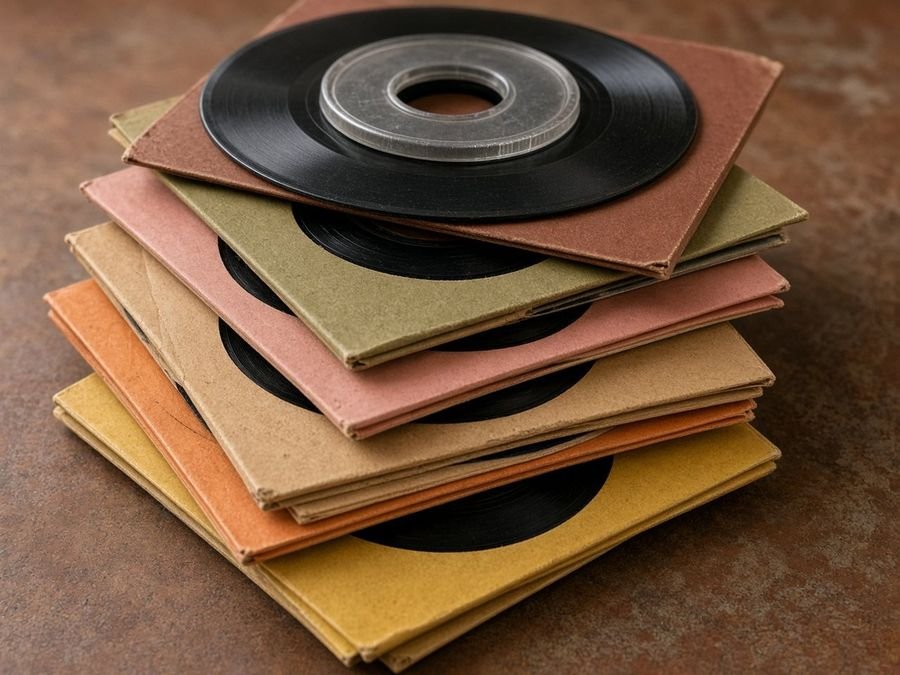
Forty-fives
Seven inches, one song a side.
RCA Victor introduced the seven-inch 45 rpm single in 1949, small, tough and cheap enough for jukeboxes and pocket money. Its big centre hole needed an adapter on many home turntables, and its plain paper bags, printed with the label’s own design, are collectable in their own right.

Sleeves and liner notes
Twelve inches square, the best gallery in the house.
Albums once came in plain brown covers. Alex Steinweiss, art director at Columbia Records, is usually credited with the first illustrated album covers around 1940, and sales followed. On the back, liner notes told you who played, who produced and why the record mattered.
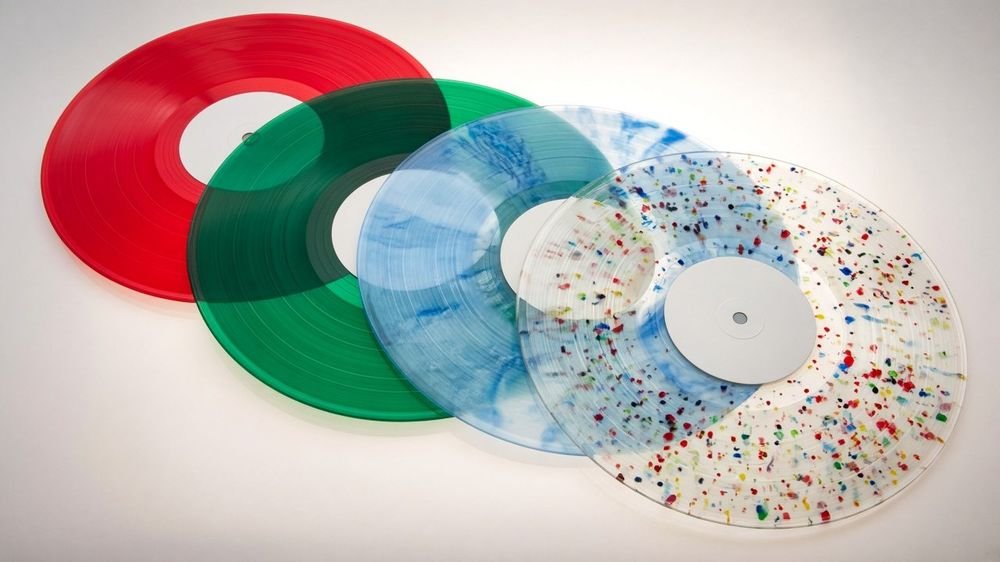
Coloured vinyl
Not every record is black.
Records are black mostly by habit and because carbon black helps hide flaws. Clear, coloured, marbled and splattered pressings have appeared on and off for decades, from promotional curiosities to limited editions made for collectors.
Catalogue numbers tell a label’s story.
Independent labels gave their releases catalogue numbers, and some treated the numbers as an art form. Manchester’s Factory Records famously numbered not only records but posters, a film and even its nightclub, the Haçienda, known as FAC 51.

Boxed, shipped and filed in the racks.
And then, somewhere, someone drops the needle.